

Voices from the oil patch

“Canada is an energy superpower” – a line that PM Mark Carney and energy minister Tim Hodgson like to repeat often. Canada should be front and centre in global energy trade discussions given the gas shortages and price hikes caused by the Russian and Iranian wars, and the closing of the Strait of Hormuz, which has shot up the price of Brent crude to $119 a barrel in March, the biggest monthly price increase ever. However, Canada and its oil and gas industry are not seen as a solution to the global oil shortages – for a multitude of reasons all beginning and ending with Ottawa and the Liberal government. It is time that Canadians began listening to the voices from the oil patch.
The country’s energy executives have lost faith that a new oil pipeline to west coast tidewater will be fast-tracked, and this is in spite of PM Carney’s assurances and his signed MOU with Alberta to make it so. Ottawa is quick to promote the possible west coast one-million-barrels-per-day pipeline and is as fast to tie it to their industrial carbon pricing regime and to their “nation-building” carbon capture initiative. A survey by ATB Cormack Capital Markets recorded the growing skepticism in the energy industry: less than half (46 per cent) hold out hope that the federal government will approve a new pipeline, while a good many are openly voicing frustration over the pace of federal action on major energy infrastructure. The criticism was summed up by one executive, “Less talk and more action.”
At April’s 2026 BMO CAPP Energy Symposium in Toronto, oil executives pulled no punches when speaking about Ottawa’s didactic dealings with the oil and gas sector. Lisa Baiton, head of the Canadian Association of Petroleum Producers (CAPP), stated the sector is losing its competitive edge due to Ottawa’s carbon tax regime, “We’re still talking about an industrial carbon tax when no other producing and exporting nation does that to their producers.” Citing the need to take advantage of the current global energy crisis, Baiton commented, “Instead of seizing the moment and taking the mantle of that responsibility, we are focusing on things that add cost and make us less competitive.” Jon McKenzie, CEO of Cenovus Energy, echoed Baiton in stating, “What it means at the end of the day is more of the global supply will come from countries outside of Canada. It [carbon tax] represents nothing more than an incremental cost that makes us less competitive with the rest of the world.” In a Globe and Mail interview, McKenzie stated the federal government needed to advance policies that would permit the sector to grow production, “We just need to find a way to get ourselves unstuck as a country.”
At the industry symposium, a new report tempered a promising forecast for the sector with the realities of pipeline constraints. Enverus Intelligence Research estimates western oil production can grow by about one million barrels per day over the next seven years, but only with immediate action at this critical inflection point for pipeline infrastructure. “Given the historically long lead times for greenfield pipeline projects, we believe it is prudent to begin that planning and permitting process now,” stated Dane Gregoris, a managing director at Enverus.
“We have crossed the threshold from Canada blocking O&G investment.”
Industry expert Heather Exner-Pirot, senior fellow at the Macdonald-Laurier Institute and special advisor to the Business Council of Canada, described the prevailing mood of the CAPP symposium on X: “They are telling you the new industry consensus position: they don’t want any industrial carbon tax and they don’t want to pay for carbon capture. We have crossed the threshold from Canada blocking O&G investment.”
The oil and gas sector and the government’s carbon tax regime are also a focus of hearings on Parliament Hill. At a recent parliamentary committee, Gurpreet Lail, President and CEO of Enserva testified,
“Nearly a year after Canadians were told that this country should become an energy superpower, industry is still waiting for enabling conditions that will make this possible. Pipelines and energy export facilities do matter, but they are only part of the equation. We also need the production growth that fills those systems. We cannot move more Canadian energy abroad if policy makes it harder and less competitive for us to produce it in the first place…
Whatever the intent behind these [Ottawa] policies, the investment signal is clear: more cost, more uncertainty and more delay that chills capital, weakens the business case for new production and makes export infrastructure harder to finance.”
At the committee hearings, Jim Keating, CEO of Oil and Gas Corporation of Newfoundland and Labrador, honed in on the rising uncertainties caused by Ottawa’s carbon tax and emissions regulations on the industry, stating,
“The complexity is of great concern. This is a program in Canada that was first discussed in 2017, initiated in 2019, was reviewed in 2022, modified again in 2023, and we are talking about it today in 2026 with more discussions to be had in 2027 and 2028. So, it is a constantly moving target and topic, and it is more than an irritant, it is something that needs to be managed. When you have had no investment and no activity that’s just one further obstacle in our way.”
What is happening on the ground affirms that the Canadian oil patch remains a cautionary and unattractive investment primarily due to the federal government’s current anti-oil development policies. Frances Donald, of the Royal Bank of Canada, observed, “This is an entire sector that has repeatedly been pushed into a position where it could not grow.” Today she is looking for consistency from Ottawa, “It is not one person, but it is a change of culture within a country… Everybody wants to hear there’s one thing we can do that could change the story. But that’s not a holistic way to expect business confidence to shift after over a decade of having moved the pendulum in the (other) direction.”
A need for a change of attitude in Ottawa and a change in policy direction is something heard often. In a National Post interview, Bryan Gould, a veteran oil executive, cites the tanker ban, C-69 impact assessments, and the Pathways carbon capture project as Ottawa policies that need reversing,
“This vilification of the extraction of the materials that are the foundation for our society, this has to stop, right? It’s going to take grit and determination and willpower to confront the hard issues, and for me, a lot of this is about having more forthright, truthful conversations with Canadians… This is virtue signalling. The customer won’t pay for it, and the investor can’t — and won’t. So it’s on the taxpayer.”
There is a growing chorus of frustrated voices. Francois Poirier TC Energy CEO, has warned, “Capital goes where it is welcome. And for too long, it hasn’t felt welcome here... If we want Canada to compete — and win … we need to act differently, starting now.” Jonathan Hordo with EY Canada talks of missed opportunities with LNG, “The U.S., especially in the LNG market, went from nothing to one of the leaders globally. We’ve lagged behind that. This is really our moment as a country where I think we missed the first wave, we cannot miss this wave.”
Goldy Hyder, the CEO of the Business Council of Canada, stated a similar viewpoint, “If we don’t get our resources out of the ground expeditiously in an investment-friendly regulatory climate, we are going to miss this window one more time and I don’t know how lucky of a country we think we are, but we don’t have the nine lives of a cat.”
Greg Ebel, Enbridge CEO stated in a recent Bloomberg TV interview that the uncertainties surrounding Ottawa’s oil policies are the primary factor in the company’s hesitation to invest in Canada,
“The conditions don’t yet exist for that pipeline to be built. There’s a tanker ban off the west coast, we don’t yet have a pipeline that’s permitted. We don’t have the ability to produce enough oil to fill that pipeline. All of that is tied up in the MOU… they have to come to solutions on emissions issues and industrial carbon tax, CO2 lines... As you might be aware, we spent $600 million trying to do this before and had the rug pulled out from under us. I think the view is changed these days, but we will have to see because my investors aren’t going to make an investment on a hope and a prayer.”
Even the recent news that there is renewed interest in building Keystone XL pipeline south, has been met with great skepticism north of the border. Former TC Energy executive Dennis McConaghy stated, “Well, my first concern about this Canadian government is how they deal with two outstanding issues in the MOU. Open ended carbon taxes on industrial emissions and dates for decarbonizing any incremental oil production out of Canada. Those are basic showstoppers... So people can talk a lot about pipelines and pipeline alternatives, but if you don’t have any incremental production to fill the pipeline, it’s the moot point… So there’s a lot of very dramatic bargaining ahead.”
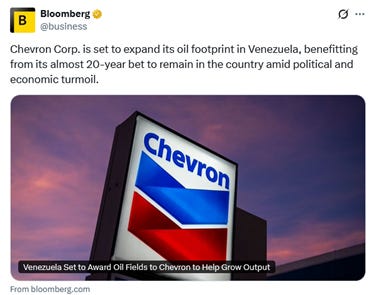
While the Carney government delay any substantive decisions relating to Canada’s oil development policies, there is a steady stream of investment dollars are flowing out of Canada. Moreover, Canada’s reputation as a reliable supplier of energy has taken multiple hits.
Oil giant Chevron announced in early April that it will make major investments in Venezuela, divesting from Alberta’s oilsands. It is securing drilling rights in the Orinoco Belt, one of the world’s dirtiest heavy‑oil basins.
Wall Street Journal reports this month $120 billion in oil exploration ventures: Chevron’s new investment is joined by Exxon’s $24 billion plan for Nigeria’s deep-water oil fields, BP’s oil exploration off the coast of Namibia, and TotalEnergies increased activities in Turkey.
Calgary-based TC Energy announced in the fall of 2025 its plans to invest $8.5 billion in U.S. energy infrastructure over the next five years, including pipeline upgrades in Virginia. The company stated: “We are going to be allocating capital predominately in the U.S. until competitive projects in other jurisdictions present themselves.”
Enbridge, a Canadian household name, is investing $23 billion in Texas gas pipelines – and the company announced that two-thirds of its investment program is going to the U.S. due to the challenging regulatory environment in Canada.
Whitecap Resources, a Calgary oil and gas company and one of Canada’s top 8 oil stocks, has stated a significant amount of its investments is now in U.S. projects.
On the Chevron announcement, Canadian market analyst James E. Thorne of Wellington Altus, made the observation on X:
The core irony is that the problem is not the barrel. It is the politics wrapped around it. Canadian heavy crude is already cleaner and more tightly regulated than Venezuelan heavy. Alberta producers operate under carbon pricing, methane rules and environmental standards that Venezuela does not match. If the world is going to burn heavy oil for decades yet, it is rational to prefer more Canadian barrels and fewer Venezuelan ones. Yet the fresh capital is going to Caracas, not Calgary.
In related news, with the word that the Strait of Hormuz was closed, international media became fixated on tanker traffic being rerouting to the U.S. Displaying a visual of 121 empty oil tankers streaming toward the Gulf of Mexico, Texas Senator Charles Schwertner posted on X:
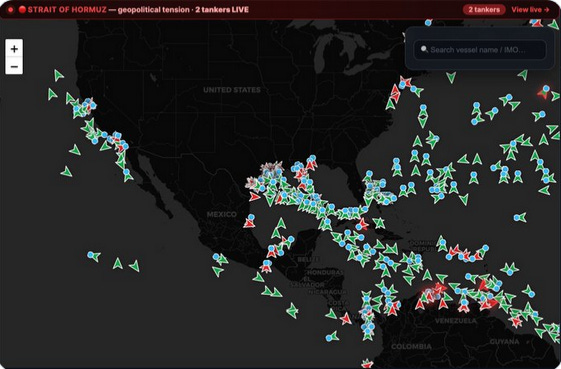
“Tankers are flooding the Gulf of [Mexico], loading up on Texas crude and refined products bound for Europe and Asia. U.S. Gulf crude exports are now on track to hit a record 5 million barrels per day in May.
From the start, Trump has been [...] championing energy policies that have built massive production capacity.
Now, it appears he has turned what Iran viewed as its golden leverage card into [...] a realignment that positions Texas at the center of global energy dominance.”

Last word to Exner-Pirot, who provided an insightful remark about the intrinsic cost of Canada’s failure to develop its oil and gas assets. In her interview on The Rob Breakenridge Show podcast she stated in part,
“So for me, it’s too late [for a pipeline to the west coast]. There is no way you’re going to see a northwest coast oil pipeline before you see Keystone XL. We are again choosing energy colony over energy superpower. We are not going to use our oil, third largest exporter in the world for any kind of foreign policy influence or soft power or enhancing our trade alliances. We are going to feed it into the American machine where it benefits them the most, again. Now in Alberta it is still pretty good news. You’re going to export more. You’re going to get more royalties, you’re going to get revenues. But are we maximizing at all the value of our energy in 2026 for the world, for the “rupture” we are going through? Absolutely not.”
So, as those in the sector will readily relate, an energy superpower Canada is not.
Postscript
Pipeline Politics
Heather Exner-Pirot makes many poignant comments in the interview with Rob Breakenridge and it is strongly recommended to view the podcast in its entirety. Here’s another salient point: “It’s [Keystone XL] pretty good economically and it’s pretty good for Alberta. It is not good from a foreign policy or a political perspective. I just feel like there’s a dissonance between going to China, going to Davos, saying the world is in rupture, middle powers have to step up. Saying in Davos, Canada is an energy power…. And then at home, not even to do nothing. But to make that export pipeline to global waters, to tidewater, the most expensive, the most risky, and the most politically contentious.”
To add to this point about doubling down on exports to the U.S. because Ottawa is not serious about building the necessary infrastructure for overseas exports, U.S. President Donald Trump issued a presidential memorandum authorizing permits for Enbridge to operate three existing pipeline facilities to flow oil from Alberta through North Dakota. Alberta Premier Danielle Smith responded as one could expect a premier of a landlocked, energy-rich province to: “This is great news for Alberta and Canada. It has the potential to unlock hundreds of billions in energy investment for our province and country.” The premier then added, “We hope the federal government moves this fast when it comes to our pipeline project submission in June. Let’s get these pipelines built!”
The article was published in The Niagara Independent and The Hamilton Independent. The By George Journal version above includes additional text and links to source media and resources, as well as the postscript.
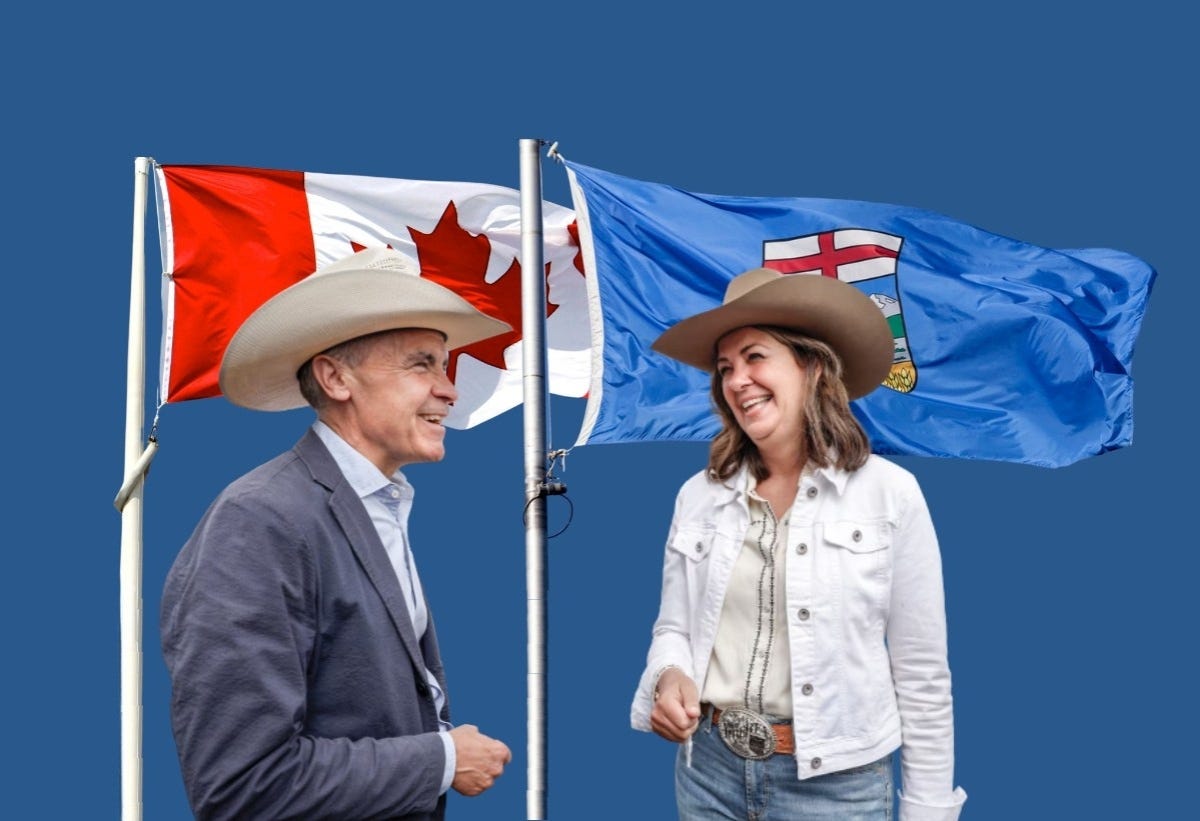
You may be interested in reading on Canada’s pipeline politics:
If you value the research and writing in the By George Journal please consider making a donation today and support independent journalism. You can donate here via PayPal.

Why would any company or corporation want to invest any more in a losing proposition. Is having cleaner LNG not a better proposition than Venezuela’s or Africas’s heavy oils.
Is Carney purposely sabotaging Canada to clear the way for Chinese investments.
At this point this is not even a.question. It’s a reality.
We need drastic change now before it really is too late.
Calgary Herald (May 5): Slow progress on energy pact risks 'letting this opportunity pass Canada by,' oilsands producers warn
"The Oil Sands Alliance, which represents five of the country’s largest oilsands producers — including Suncor Energy, Canadian Natural Resources and Cenovus Energy — pointed out no other major exporters of heavy oil face such an industrial carbon tax, stressing it will limit the sector’s ability to expand and attract investment."
https://calgaryherald.com/opinion/columnists/varcoe-slow-progress-on-energy-pact-risks-letting-this-opportunity-pass-canada-by-oilsands-producers-warn